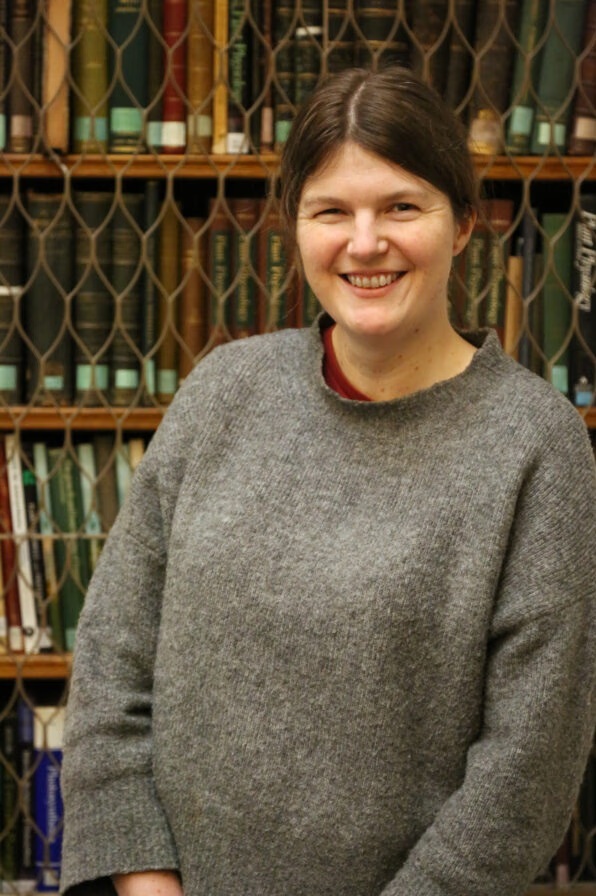
Alice Cheetham is the Nature Networks Project Manager at the Linnean Society of London. She has a background in outside the classroom learning and public engagement, with a focus on nature, environment and conservation. She previously worked with the education teams at ZSL London and WWT London Wetland Centre before joining the Linnean Society in 2024 as Education Manager.
It’s easy for some of us to take our confidence in natural spaces for granted; we’ll saunter through brambles, flip logs, poke and prod at things with rogue abandon. A hoverfly buzzing around us is no cause for concern, ants and bugs crawling in the grass next to us isn’t a bother – but that’s far from the case for everyone.
I lead the Linnean Society’s Nature Network project, funded by the John Lyons charity, and my aim is to get teenagers curious about the natural world. I work with secondary schools across North and West London, engaging 11-14-year-old students with nature and giving them a taster of natural history. Through observing, investigating and noticing nature around us, students are experiencing some of the core elements of natural history, often within the grounds of their own local school sites!
How we engage with nature varies from group to group, site to site and depending on the time of year! One of the aims is to show students and staff that they don’t need to go far to engage with nature – it’s on our doorstep, if only we know where to look. We use a mix of creativity, science and nature connection; we might be setting up camera traps and mammal footprint tunnels in a sports field, gathering leaves from flowerbeds around the school to press and use for cyanotypes or having fun with planting or making birds feeders.
Following the evaluation gathered in our Year 1 of delivery, 100% of staff from schools providing feedback agreed that ‘Students have been able to relax and enjoy time in nature’ and ‘Students have shown more confidence in using nature spaces.’ From students, there was an overall positive trend when asked about thoughts on nature from pre and post session surveys.
In some schools, I’ve worked with already existing science, garden or eco groups – so the students have opted to be there and are already keen. We’ve been able to do structured practicals, recording our data and even some lab work! In one school, both students and staff had a great time looking at microorganisms in moss from the school car park, heavily inspired by Dr Andy Chandler-Grevatt’s superb Moss Safari resources. In fact, it was such a good session, the school’s lab tech has now incorporated it into their school’s Year Seven curriculum.
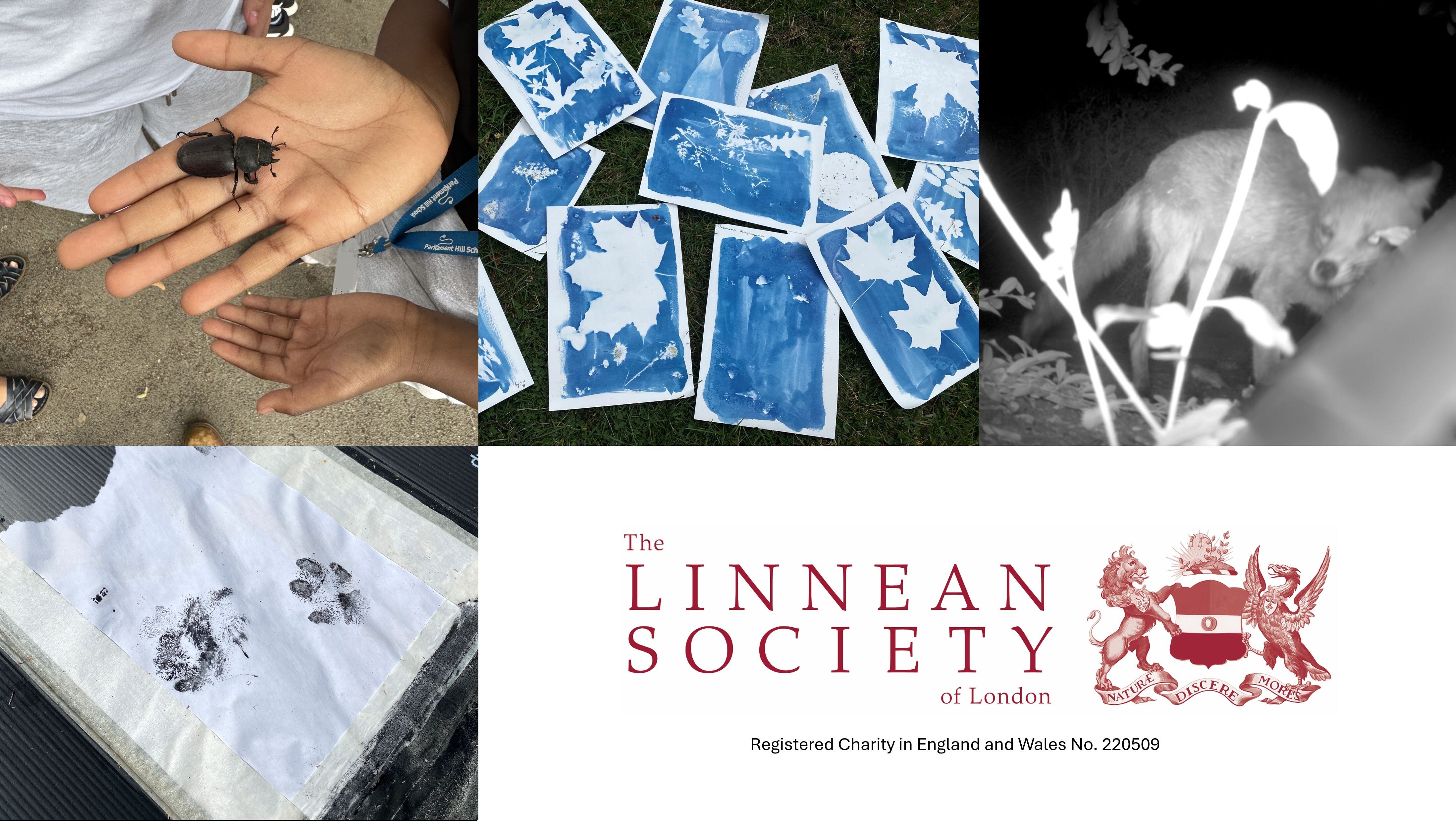
In other schools, I’ve worked with students selected by the school to attend, usually during a lesson slot during the school day. Sometimes, for these groups, it’s more a case of some gentle confidence-building out in nature and a chance to relax. It might be that there’s a little less science and a bit more of the creative and nature connection elements. Spending time in nature can be a great tool for our mental and physical wellbeing, something that we’ve no doubt all come to appreciate a lot more in a post-Covid-19 world. One moment that stands out to me from this summer term was working in an all-girls school with a somewhat reluctant group and running a relaxed invertebrate session. Upon flipping a log, we discovered an adult female greater stag beetle. Having never seen one before, for us to go from initial scepticism, bordering on near fear, to several students feeling confident enough to let her walk across their hands was quite a moment. In fact, a pair of students who’d not previously been particularly engaged took a real shine to her and happily helped with handling between them whilst I chatted away, before returning our lovely stag beetle back from whence she came. It’s small moments like this which can leave a lasting impact, and that’s the hope from this project.
All of this serves to build confidence and interest in the natural world, and perhaps encourage students to consider a future Biology or Natural History GCSE! Using local spaces to interact with nature through fieldwork and creative experiences and discovering native flora and fauna are key elements of the upcoming Natural History qualification. Part of our aim is not just to encourage students, but also to demonstrate to staff that doing practicals outside doesn't have to be complicated. Often the green spaces within or nearby schools can hold a surprising range of things, once you know where to look and what to pay attention to. But even for those who don’t feel like pursuing these subjects, to have a growing audience of people who are interested in, care for and can better advocate for nature is something we can all appreciate the importance of, especially now.
This project is currently available to state schools with KS3 students across North and West London, in the boroughs of Barnet, Brent, Camden, Ealing, Hammersmith & Fulham, Harrow, Kensington & Chelsea and Westminster.
We’re always keen to hear from new schools that would like to take part, especially for the coming 26/27 academic year. You can find out more information on our website, https://www.linnean.org/learning/nature-network, or by emailing our Nature Network Project Manager at alice@linnean.org.