Victoria Turner is Education Lead at Blue Marine Foundation and leads the Blue Marine Max Stenbeck Legacy Programme, which aims to transform how young people engage with ocean and environmental education. A former Head of Geography, teacher and Cambridge University Press & Assessment examiner, Victoria spent 12 years in education before moving into conservation. She went on to design an environmental education programme for the Greek curriculum and later became Executive Director of the Ionian Environment Foundation. Today, she works at the intersection of education and conservation, developing curriculum resources, careers programmes, field learning opportunities and youth advocacy initiatives that help young people understand and protect the natural world.
It is wonderful to see that the Natural History GCSE includes a minimum requirement of 20 hours of fieldwork, recognising what many educators have long understood: when students learn outside, it sticks! Every adult will remember the impact that outdoor learning had on their understanding of, and engagement with, the natural world as a student – if they were fortunate enough to experience it.
While school grounds and playgrounds provide valuable starting points, they too often represent the limit to students’ opportunity for exploration. To ignite and sustain a love for natural history in the next generation of naturalists, conservationists, scientists and environmental leaders, we must facilitate young people to experience the extraordinary diversity of the natural world beyond the school gate.
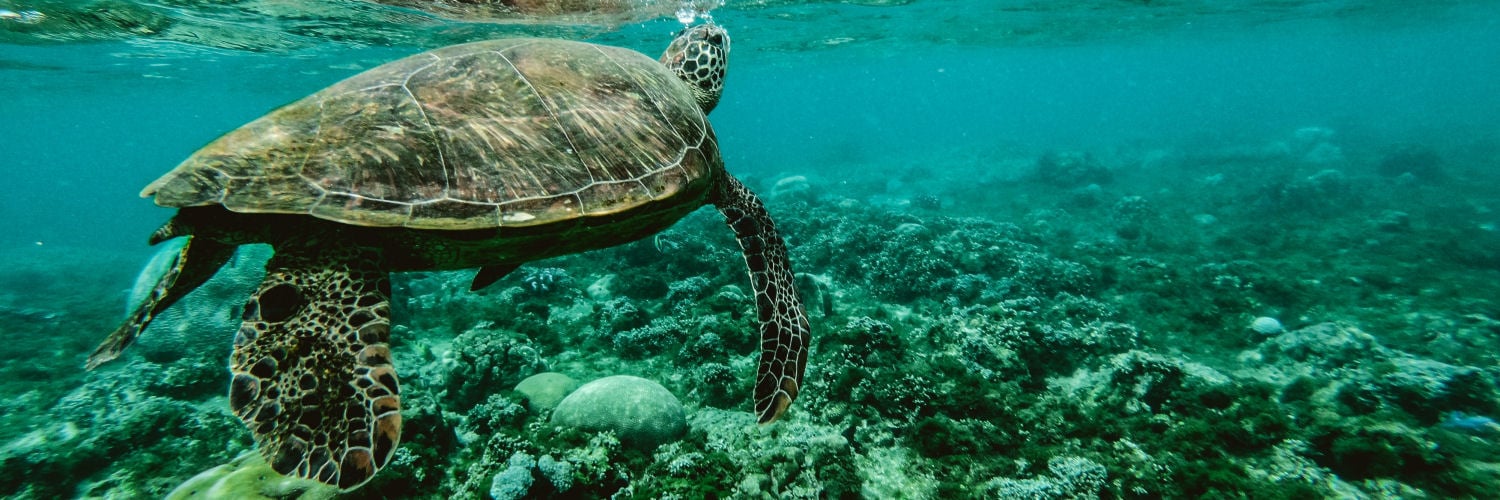
The inclusion of marine habitats within the Natural History GSCE is a welcome opportunity for learning to embrace the ocean as a powerful natural resource, and, as previously highlighted in a viewpoint article by Jenny Griffiths, as a dramatic and hopeful solution to the climate and biodiversity crisis. There is growing support for embedding the ocean more firmly within curriculum teaching, perhaps propelled forward in the wake of David Attenborough’s resounding final line of Ocean with David Attenborough, ‘If we save the sea, we save our world’.
At Blue Marine Foundation we are launching a new programme with the ambitious but important goal of ‘bringing the ocean to the classroom and the classroom to the ocean’, delivering solution-led learning and inspiring curiosity and agency in the most underserved schools across the country.
For a child living in the city, a visit to the coast may be their first opportunity to witness the scale and wonder of the ocean and appreciate its connection to climate, biodiversity and their own wellbeing. Even for children living in coastal towns, a fieldtrip to the sea may never happen in their whole school experience. Yet these are the critical ‘awe and wonder’ moments that create lasting memories, impactful learning and a deeper sense of curiosity for the natural world, while also inspiring future career opportunities.
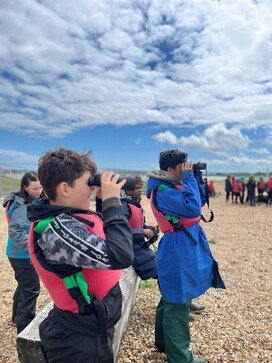
Access to these experiences is not equal. For some schools, outdoor learning is a regular part of education, supported by transport, staff capacity, confidence with risk assessments and sufficient budget. For many underserved schools, these same requirements become barriers that are difficult to overcome. The result is a widening socioeconomic divide in access to outdoor learning, where young people from less advantaged backgrounds, who would benefit most from meaningful, confidence-building experiences in nature, are often the least likely to receive them. This is therefore not only an educational gap, but a societal one. Early experiences shape what young people believe is possible for them. When some students are given regular access to nature, fieldwork and conservation role models, they are more likely to see environmental careers as relevant and achievable. When others are kept at a distance from these experiences, they are also kept at a distance from the skills, discourse, confidence and networks that open routes into conservation careers. The divide in outdoor learning therefore becomes a divide in future opportunity, at precisely the moment when society needs all young people, across all backgrounds, to feel united in their power and ability to care for the natural world.
If we are serious about delivering ambitious climate, sustainability and conservation education, as the upcoming curriculum reform thankfully recommends, while also providing tangible routes into employment, we must be equally serious about removing barriers to participation. Fieldwork should not be viewed as an indulgent add-on for schools. It should be viewed and valued as essential educational infrastructure, equally as important as science labs, libraries and sports facilities. It must be recognised as a critical element of cognitive and equitable learning gains for young people in their most formative years.
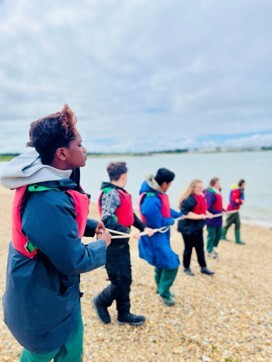
This conviction sits at the heart of the Blue Marine Max Stenbeck Legacy Programme. The appetite for marine education is clear. In just one year, the programme has engaged 2,760 young people. Through 20 careers talks delivered across 15 schools, 1,380 students completed a pre- and post-talk poll, which revealed an 89% increase in interest in marine conservation careers following the sessions. Students developed their skills as ocean advocates through film-making workshops, while new partnerships have been established to deliver at least 55 free fieldtrips for underserved schools in the second year of the programme. We aim to ensure that a young person's opportunity to engage with the natural world is not determined by their postcode or their school's budget. Every child deserves the chance to move their learning beyond the school gates to build knowledge, skills and hands-on experiences that open their eyes to careers in some of the UK’s fastest growing sectors.
The future of conservation depends not only on protected areas, scientific research and policy decisions. It depends on whether today's young people feel connected to the natural world and empowered to care for it. If we want to create a generation ready to tackle climate change, biodiversity loss and sustainability challenges, we must remove the barriers that prevent them from experiencing nature first-hand. Lasting conservation begins with education, and the most transformative education begins when we step outside the classroom, and beyond the school gates.